


Introduction
Do you know that the successful functioning of an electronics gadget depends on the quality and appropriate usage of circuit elements that go into the building of a circuit? Do you have any problem in selecting and using the correct component for your circuit to build? Here is the comprehensive guide in the form of tips and tricks for your successful building of digital electronics projects. Hence, please go through the entire post and benefit.
For building a successful electronic project, one should follow the tips and tricks discussed in this post. The active and passive components in the schematic play a vital role. As such, the circuit elements should be appropriate and optimal for the circuit’s performance. In turn reflect the performance of the gadget built around that schematic. In general, take any small circuit for that matter, the schematic will definitely include resistors, capacitors, semiconductors, and a power source to energise that circuit. Hence, these are the items that may be minimal for a circuit to function.
Circuit Elements
In this write-up, we are going to discuss all about the circuit elements in detail, including their quality, rating, tolerance, and working physical size, apart from the active and passive components connected with it. We should know the working conditions of the elements.
What will be the impact if the selected component is used in a circuit? The circuit may fail to function as it should. Poor performance with safety hazards. It creates damage to other associated components besides self-damage. The whole project may become useless because of the substandard quality of the parts, besides increasing expenditure for repairing and maintenance.
Right component for right circuit
Before commencing a project to build, it is worth considering the availability of the critical components that go into the circuit. Because many a time, the particular component may not be available or may be available with a deficiency in quality. Mismatching may result in poor performance and poor results. Even the operation may stop in the middle and become useless. As such it is recommended to confirm the availability of vital components such as transistors, ICs, and special components.
Having discussed the details of procuring quality components for the assembling purpose, we shall now analyse a few other important points in procuring the items one by one.
Resistors
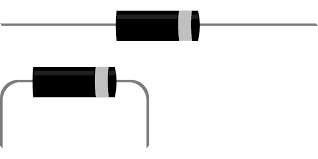
Fixed Value Resistors
|
Illustrations |
Remarks |
|
330 ohms, 1K ohms, 5.6K ohms, 10K ohms, etc. |
Mostly carbon resistors are used in normal circuits. Power Rating: ⅛ W, ¼ W,½ W, 1W, etc. Axial type and Radial type.- Both are employed in PCBs. |
Normally, fixed value resistors for the simple electronics projects require no more than 1/8 or ¼ watt resistors as circuit elements. In power supply sections and exceptionally high current handling places, resistors rated with more than 1 watt may be required in some circuit designs. Hence, the specifications of the circuit elements are to be consulted and taken care of while procuring the elements.
Adjustable Resistors
|
Type |
Illustrations |
Remarks |
|
Semi variable |
1K ohm Preset, 220K ohm preset, etc. |
Resistance Values can be adjusted as required and left fixed in the circuit. |
|
Continuously variable |
10K ohms ( volume control) |
Can be adjusted whenever required, continuously |
Adjustable resistors or presets suitable for PCB insertion should be taken care of. Sometimes rotary-type volume controls are required and one should consider the position of such controls in the PCB or outside the PCB. The important point to be noted here is the tolerance, size and suitability of the components to PCB design.
Ratings and Tolerance
Ratings of the components have to be checked while buying them. When you procure components, appropriate ratings of the components are to be considered. For e.g. in power supply circuits, if the value of a particular resistor is rated as 1W (one watt), then you must procure that resistor with 1W capacity. If you try to use lesser watt resistor in its place, it may burn out, because it may not tolerate that much current flow through it, and as such, it may get heated up and finally burn out.
Need to select the right resistors. Resistors, though small, are at the same time less expensive component play a vital role in a circuit. Available in various sizes, value ratings and tolerances. Hence, one should select a resistor for a circuit, a suitable value, i.e., ohms, power ratings and accuracy (tolerance). These are the important tips and tricks in selecting resistors.
Capacitors
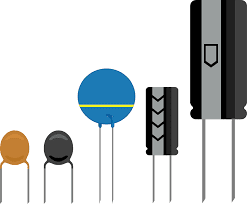
Fixed Value Capacitors
|
|||||
Variable Capacitors
|
Illustrations |
Remarks |
|
22PF, 100PF, 1KPF, 0.05 MFD 500PF Air Gang condensers. |
Values can be adjusted Trimmers are low-value capacitors. Tuning capacitors are made up of mica insulators. In olden days, radio circuits, Air gang condensers were used. |
In the case of capacitors, the type of capacitors is important. Ordinary ceramic, tantalum and electrolytic capacitors have different functionality in the circuit diagram. More important aspect is its working voltage. Always use higher rated voltage electrolytic capacitors in the circuit for which it has been designed. Radial and axial types are available. Appropriate type suitable for the circuit and PCB should be selected and used.
Electrolytic Capacitors
|
Illustrations |
Remarks |
|
4.7 MFD/16V, 10MFD/25V, 47.MFD/40V, 1000MFD/100V, 2200MFD/400V etc. |
Definite polarity + and – are to be observed for the terminals. Working voltage-rated values must be observed strictly. |
So it is always recommended that the voltage rating of electrolytic capacitors to be observed. In a 9V operated circuit normally if the electrolytic capacitor is rated for 16V then you must use that rated capacitor only. If it is less voltage rated for e.g. 10V, then the capacitor may not withstand that working voltage and become shorted quickly or at the earliest. The tips and tricks mentioned in this section should be followed for successful project building.
Semiconductors
The tips and tricks for successful project building the important points to be observed in selecting Semiconductors like diodes, Transistors etc., are the vital components for a project building. The circuit schematic functions based on the type, capability of the components, such as current handling capacity, gain and frequency response.
TRANSISTORS
|
Illustrations |
Remarks |
|
BD149, 2N3055, BC548, BC549 |
Signal processing, Audio, Power Transistors, Power Amplifiers, Voltage regulators. PNP and NPN types Germanium and Silicon Transistors, MOSFETS |
The transistors may act as switches, signal amplifiers, inverters, and even perform simple functions depending upon the characteristics of the item. They may be low-power, high-power, or even medium-power transistors that are being used. In the case of diodes, they may be for rectification, signal passing, voltage controls and voltage stabilisation.
Sometimes high-power transistors may require proper heatsinks to be applied for efficient performance and for longer life.
Various package types of transistors are available in the market. One should use appropriate and suitable to the circuit as well as to the PCB should be used. Transistor outline packages such as TO39, 52, 92,126 and 220 are some common packages suitable for PCB assembling. Equivalent transistors may be required to use in certain times when the original type is not available. In that case pin configurations and other working details have to be taken care of. Heat sink should be used for transistors wherever required in the circuit. This tips and tricks should be strictly followed for failure free operation of the circuit.
Diodes and LEDs
|
1N4148, 1N4001, 1N4007, Z5.1 |
Signal Diodes, Rectifier Diodes, Zener Diodes |
|
LEDs |
Red, Green, Yellow, Blue, White colour LEDs |
Diodes and transistors may be in various sizes, physical conditions, and plastic or metal encapsulated. Discrete components may be user-friendly for assembly as well as for PCB mounting with pin types.
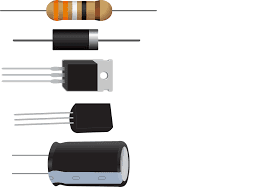
These are common types and mostly suitable for the PCB assemblies. Correct value diodes are to be procured for optimum performance.
INTEGRATED CIRCUITS
|
Illustrations |
Remarks |
|
LM555, 741, 7805, 7400, 7493, TBA810 CD4001, CD4049 |
Timer ICs, Operational Amplifiers, Audio ICs, Voltage regulators, Logic gates, etc. Logic Gate ICs – two types: TTL and CMOS |
The tips and tricks in the case of ICs are very important to follow for successful project building.
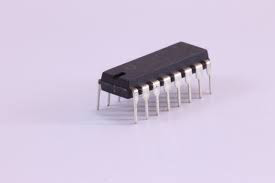
CMOS ICs have to be handled with care and to be kept in the foil pack until it is actually put into the board. It is advisable to use IC sockets for such type of ICs. Heat sinks for power ICs, transistors are to be used without fail to safe guard the vital components and for its optimum performance. As such IC sockets are recommended for ICs.
Transformers
The tips and tricks for successful project building continue with selection and usage of transformers also.
Power supply transformers may not be able to fix on PCBs. They have to be fixed outside and wires are to be connected to the appropriate terminal points on the board. Transformers are to be procured with suitable voltages and current deliverable capabilities.
For example for ordinary power supply 6 or 9V with up to 300 mA capacity may be sufficient. If large current is required 1 or 2 Amps rated may be used. As such these high current transformers are bulky and should be fixed outside the board.
Relays, Buzzers and speakers
When selecting these components miniature components are suitable for the assembly work. Size is important consideration for these components. Elements such as Relays made for the PCB mounting are available in the market and one should procure such types only for our work.
These are only some of the components often used in the circuit discussed for suitability for our assembling work. Hence one should ascertain the circuit and PCB design size before going to procure the circuit elements for the project assembling.
Conclusion
Choosing the right components is not just a technical requirement—it is an art and a science. It combines knowledge, experience, and careful planning.
No matter how simple or advanced your project is, always remember:
👉 The success of your circuit depends on the components you choose.
By understanding specifications, analyzing requirements, and following best practices, you can build circuits that are not only functional but also reliable and efficient. I hope the tips and tricks provided in this post would definitely make even a novice a skilled person in building projects.



[…] Read also : ‘Circuit Elements for successful project building.’ […]